

Private company AI is a managed system built specifically for one business, whereas public chatbots are general-purpose tools shared by millions of users. The core difference lies in data isolation and authority. Public tools like ChatGPT offer broad knowledge but lack the specific operational context and strict permission controls required for sensitive business workflows. For small and midsize businesses, this distinction determines whether an AI assistant can safely handle client data, internal records, and authorized actions.
Data Isolation and Privacy Boundaries
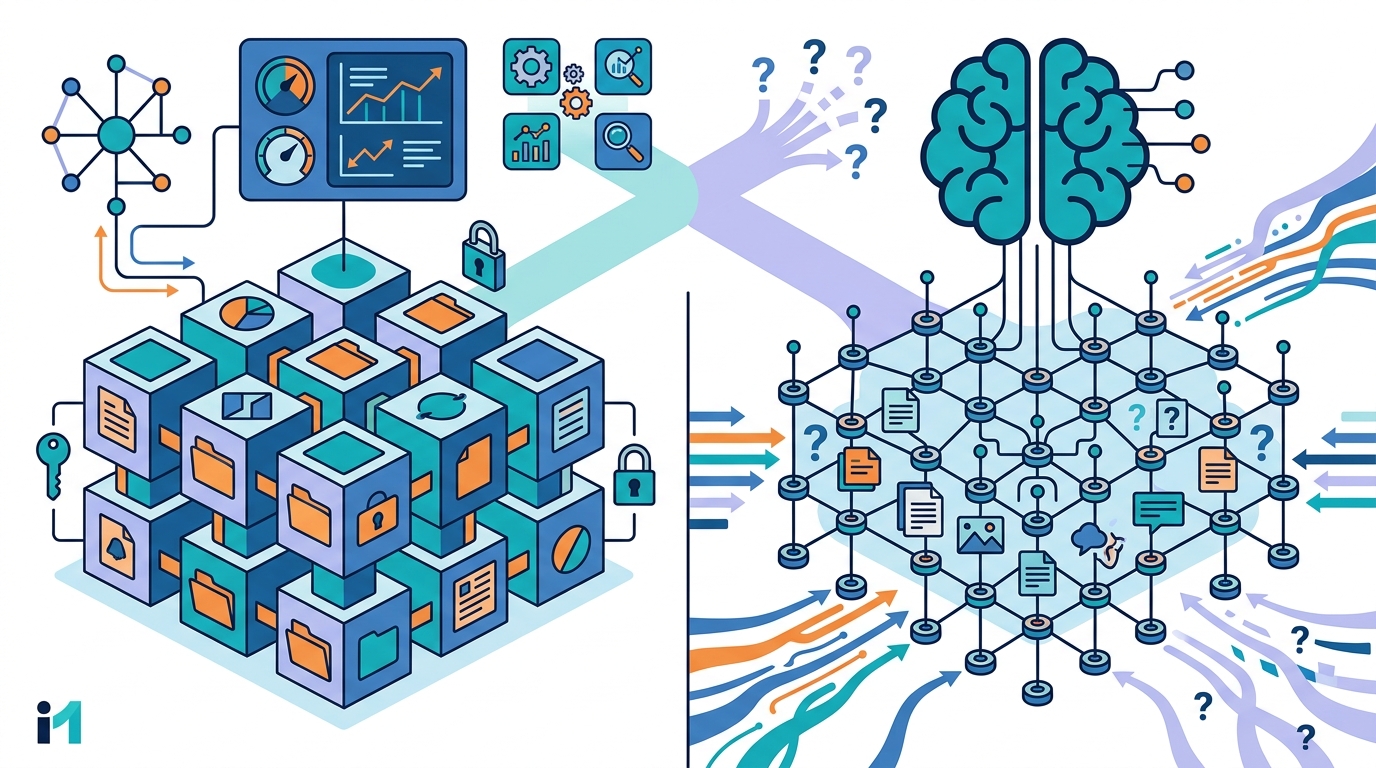
The most critical divergence between private and public AI is how they handle information. A public chatbot is a shared service where user prompts may be used for model training or visible to other users depending on the privacy settings. In contrast, a private company AI operates on independent primary operational databases. This means the data your company provides is held for your company alone. Dominus Foundry, the builder of Sabina, ensures that your company's data is yours. If you leave the service, the data is turned over to you. Foundry never holds your data hostage. This architectural choice is vital for industries like law, insurance, and property management, where client confidentiality is a legal and ethical mandate.
Authority Models and Action Control
Public chatbots are designed to answer questions and generate text, but they do not have a formal authority model for taking actions. They cannot natively execute tasks like sending an email, updating a CRM, or processing a payment without external integrations that often lack granular permission controls. Private company AI, such as Sabina, uses a written authority system. You decide what the AI may do, what needs your approval, and what stays with your team. Authority is ratified in writing, one capability at a time. This ensures that the AI acts only within the boundaries you define. For example, if a caller asks for a discount, the AI checks its written grants. If the grant requires approval, it proposes the act and waits for a yes. If no grant covers it, it returns the question to you. This level of control is absent in general-purpose public tools.
Contextual Memory and Operational Continuity
Public chatbots typically have a limited context window and do not retain memory across sessions unless specifically prompted to do so. This means you must repeatedly provide background information for each new conversation. Private company AI is designed to carry understanding forward. Sabina uses a structured workspace called Forge to store agreed business records, including customers, decisions, commitments, and outcomes. This context travels with the work. A customer's scheduling requirement learned during one job can inform the next booking. When another authorized teammate takes over, the relevant context can travel with the work. This continuity reduces the administrative burden on your team and ensures that no critical detail is lost between interactions.
Implementation and Operational Support
Setting up a public chatbot is often a self-serve process. You create an account, enter a prompt, and start using it. However, this approach places the burden of configuration, maintenance, and security on your team. Private company AI is a managed service. Dominus Foundry sets up and operates Sabina for your company. They shape the AI around your business, connect approved systems and sources, and establish starting responsibilities. Your team teaches the AI the business and decides what it may handle. This managed approach ensures that the AI is not just a tool, but a reliable operational partner. The service includes Forge, a workspace for the agreed business records, and a clear delivery path. This reduces the technical overhead for small and midsize businesses that may not have dedicated IT staff.
Cost and Value Proposition
Public chatbots are often free or available at a low monthly subscription cost. However, this low cost comes with limitations in data privacy, authority control, and operational support. Private company AI, such as Sabina, is priced at $1,500/month with Forge included and no setup fee for the standard offer. Larger accounts receive custom pricing. This price reflects the value of a managed, private, and authoritative AI system. It is an investment in operational efficiency, data security, and reduced administrative burden. For businesses where a single data breach or unauthorized action could be costly, the premium for private AI is justified by the risk mitigation and operational reliability it provides.
Key Takeaways
- Private company AI is a managed system built for one business, while public chatbots are general-purpose tools shared by millions.
- Data isolation is a core feature of private AI, ensuring your company's data is held for your company alone and is yours if you leave.
- Private AI uses a written authority model, allowing you to define exactly what the AI may do and what requires your approval.
- Contextual memory in private AI, such as Forge, allows the system to carry understanding forward across sessions and team members.
- Private AI is a managed service, with the provider handling setup, operation, and maintenance, reducing the technical burden on your team.
- The cost of private AI reflects the value of data security, authority control, and operational reliability, which are critical for sensitive business workflows.
Frequently Asked Questions
What is the main difference between private company AI and public chatbots?
The main difference is data isolation and authority control. Private company AI is built for one business and uses independent databases, while public chatbots are shared services where data may be used for training or visible to others.
Does private company AI have access to my company's data?
Yes, but only to the sources you approve. You decide which sources the AI can access, which responsibilities it carries, and what authority it has. Your company's data is held for your company alone.
Can private company AI take actions on my behalf?
Yes, but only within the authority you grant. Authority is ratified in writing, one capability at a time. The AI acts only within the boundaries you define and waits for approval when required.
How is private company AI different from a virtual assistant?
Private company AI is a software system that can operate continuously and handle a wide range of tasks. A virtual assistant is a human who handles delegated administrative work and uses human judgment within an agreed role. Private AI is not a replacement for professional judgment but a tool to support it.
What happens to my data if I stop using private company AI?
Your company's data is yours. If you leave, it is turned over to you. The provider never holds your data hostage. The form and timetable of the handover are set out in writing when you start the service.
Is private company AI more expensive than public chatbots?
Yes, private company AI is typically more expensive than public chatbots. However, the cost reflects the value of data security, authority control, and operational support, which are critical for sensitive business workflows.
Conclusion
Choosing between private company AI and public chatbots depends on your business's needs for data security, authority control, and operational support. For small and midsize businesses handling sensitive client data and complex workflows, private company AI offers a level of control and reliability that public tools cannot match. Sabina, built by Dominus Foundry, provides a managed private AI solution with Forge included, allowing you to define the work, information, and authority. To see how Sabina could help your company, start your assessment.