

Trade and field service companies can automate customer messages by using managed AI that handles routine follow-ups and status updates while reserving complex decisions for human judgment. This approach ensures customers receive timely, accurate responses without the cold, robotic tone that often accompanies basic automation. By defining clear boundaries for what the AI can do, businesses maintain the personal touch that builds long-term trust.
Defining the Boundary Between Automation and Human Care
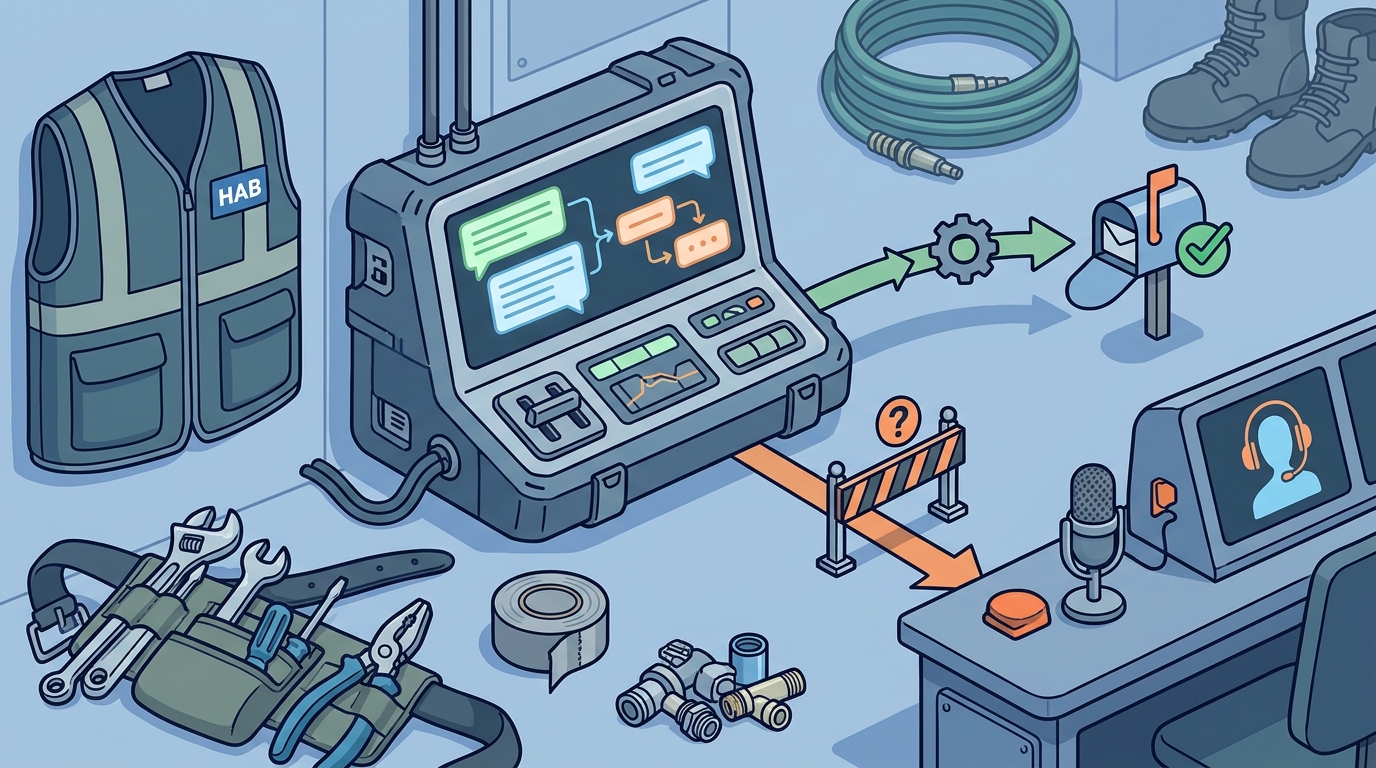
The core challenge in field service automation is determining which tasks benefit from speed and which require empathy. Managed private business AI is a service where a provider configures and operates an AI system specifically for a company's unique workflows, ensuring the technology aligns with business goals. In the trades, a missed call or delayed quote can lead to lost revenue, but a generic automated reply can erode customer loyalty. The solution is not to replace the human, but to augment them. When a customer asks for a discount or changes a job scope, the AI should flag this for a human review rather than attempting to negotiate. This distinction preserves the personal touch by ensuring that sensitive interactions are handled by a person who understands the nuance of the relationship.
Using Structured Records to Maintain Context
Personalization in automation fails when the system lacks memory of past interactions. A customer who had a difficult experience last month should not receive the same cheerful, generic follow-up as a new client. Company knowledge retention is the ability of an AI system to store and recall specific details about customers, jobs, and past commitments to inform future interactions. By using a structured workspace like Forge, which is included with Sabina, businesses can ensure that every message carries the context of previous conversations. If a customer mentioned a specific deadline or a concern about noise levels during a prior call, the AI can reference that detail in the next update. This continuity makes the customer feel heard and valued, rather than like a ticket number in a queue.
Implementing Authority Controls for Safe Automation
One of the biggest fears among trade business owners is that an AI might say something it shouldn't. To prevent this, you must implement strict authority controls. Written authority is a formal, documented grant that specifies exactly which actions an AI is permitted to take without human approval. For example, you might grant the AI permission to send a standard appointment reminder but require human approval for any message involving pricing or contract changes. This layer of control ensures that while the volume of messages is automated, the content remains safe and aligned with your brand voice. It allows the AI to handle the high-volume, low-risk communications that clog up a team's day, freeing them to focus on the high-value, high-touch interactions that require a human touch.
Measuring the Impact on Customer Experience
Automation should be measured not just by efficiency, but by its effect on customer satisfaction. If customers feel ignored or confused by automated messages, the system is failing. You can track metrics such as response time, customer satisfaction scores, and the rate of human interventions. A well-configured system will show a decrease in routine inquiries reaching the team, while maintaining or improving satisfaction scores. This data helps you refine the AI's behavior over time. If you notice that customers are asking the same question repeatedly, it may indicate that the automated response is not clear enough. By continuously reviewing these metrics, you can adjust the AI's scripts and authority levels to better serve your customers.
Key Takeaways
- Automate routine tasks like reminders and status updates, but reserve complex decisions for humans.
- Use structured records to ensure the AI remembers customer preferences and past interactions.
- Implement written authority controls to define exactly what the AI can and cannot do.
- Monitor customer satisfaction metrics to ensure automation is not eroding trust.
- Start with a small, well-defined set of tasks before expanding the AI's responsibilities.
- Ensure the AI's tone matches your brand voice to maintain a personal connection.
Frequently Asked Questions
Will customers know they are talking to an AI?
It is best to be transparent. If a customer is interacting with an AI, they should know it. However, the AI should be presented as a helpful assistant that works for your team, not a replacement for them. Transparency builds trust and sets the right expectations for the level of interaction.
Can the AI handle angry or upset customers?
Generally, no. If a customer is angry or upset, the AI should detect this sentiment and immediately escalate the conversation to a human agent. Attempting to resolve an emotional issue with automated scripts can make the situation worse. The AI's role is to gather information and pass it to a human who can provide empathy and a solution.
How do I start with AI automation in my trade business?
Start by identifying one specific, repetitive task that is taking up too much time, such as sending appointment reminders. Configure the AI to handle only that task, with strict authority controls. Once you are comfortable with the results, you can gradually expand its responsibilities to other areas like quote follow-ups or status updates.
Is my customer data safe with a managed AI service?
Yes, provided you choose a reputable provider that prioritizes privacy. Sabina, for example, uses independent primary operational databases for each company deployment, ensuring that your data is not shared with other clients. You should always review the provider's privacy policy and data handling practices before committing.
How much does it cost to implement AI for customer messages?
Costs vary depending on the provider and the scope of the service. Sabina offers a standard offer at $1,500/month with Forge included and no setup fee. Larger accounts may receive custom pricing. It is important to compare the cost of the service against the time saved by your team and the potential revenue gained from faster, more responsive customer service.
Conclusion
Automating customer messages in the trades does not mean sacrificing the personal touch. By using managed private business AI with clear authority controls and structured records, you can handle the routine while keeping the human connection. Sabina is designed to help your company achieve this balance, providing a reliable AI assistant that works within the boundaries you set. To see how Sabina can help your team, start your assessment today.