

Property management teams often lose hours to repetitive leasing tasks that drain staff energy. Leasing workflow automation is the use of intelligent software to handle routine tenant interactions, document preparation, and follow-ups without constant human intervention. By integrating these capabilities, small and midsize property managers can maintain high service levels while reducing administrative overhead. This listicle highlights seven specific AI features that directly improve the leasing lifecycle, from initial inquiry to lease signing.
1. Intelligent Inquiry Triage and Response
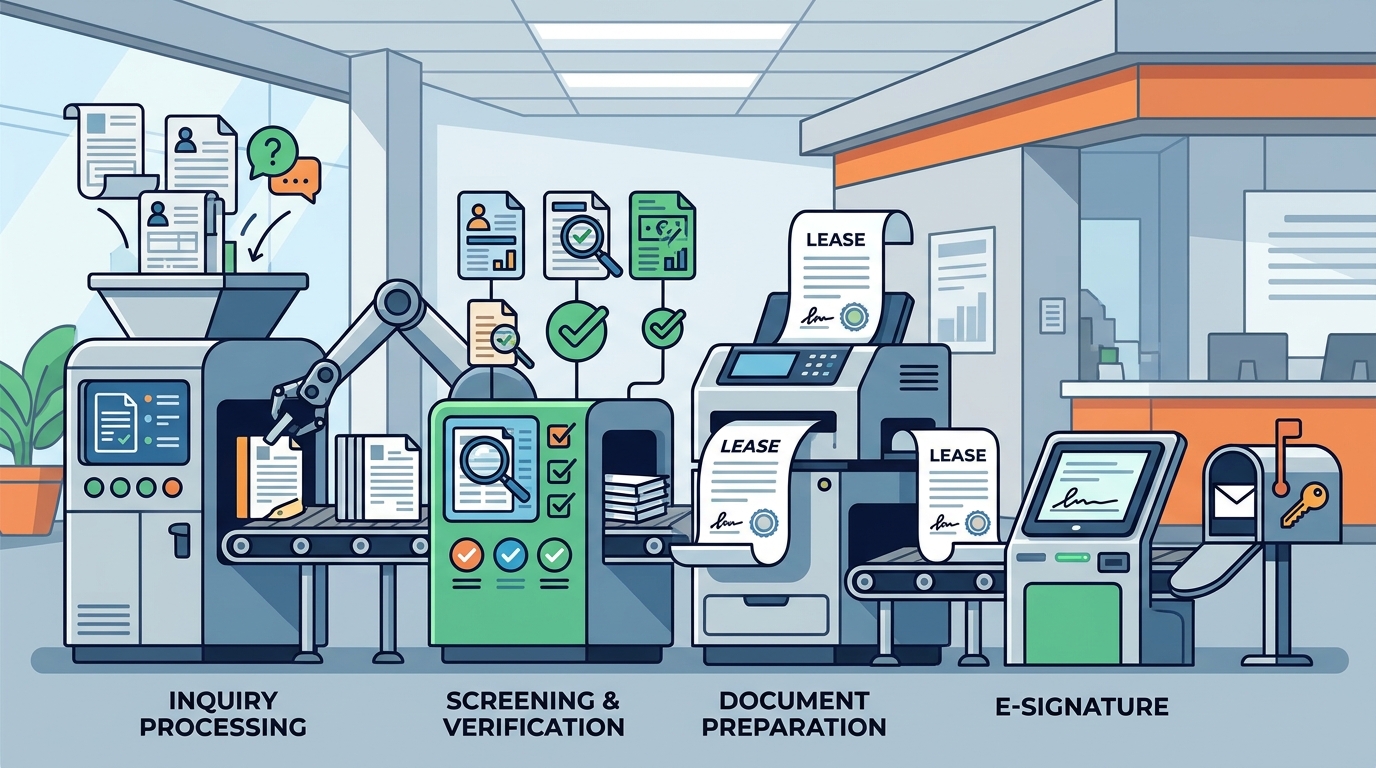
Instant, context-aware responses to tenant inquiries reduce response time and improve lead conversion. When a prospective tenant asks about availability or pricing, an AI system can immediately pull the correct data from your records. It drafts a professional reply that matches your company's tone and includes relevant property details. This ensures no lead goes cold while your team handles more complex tasks. For additional details, review the Tour the Back Office.
2. Automated Document Drafting
Generating lease agreements and addenda from templates saves significant legal and administrative time. Instead of manually filling out forms, the AI populates documents with verified tenant and property data. It flags missing information or inconsistencies before the document is sent for signature. This reduces errors and accelerates the move-in process for both landlords and tenants.
3. Continuous Follow-Up Sequences
Automated follow-ups keep leasing pipelines moving without requiring manual reminders. If a tenant does not respond to a lease offer or a document request, the system sends polite, scheduled reminders. It tracks the status of each interaction and escalates to a human agent only when necessary. This consistency ensures that potential leases do not stall due to simple communication gaps.
4. Real-Time Status Tracking
Centralized visibility into every leasing step prevents bottlenecks and improves team coordination. The AI maintains a live record of where each application stands in the approval process. Managers can see at a glance which files are awaiting signature, which need background checks, and which are ready for move-in. This transparency helps allocate staff effort to the most critical tasks.
5. Data-Driven Compliance Checks
Automated verification of local housing regulations reduces legal risk during leasing. The system can cross-reference lease terms with current local ordinances and fair housing guidelines. It alerts the team if a proposed clause might violate specific regional rules. This proactive approach helps property managers avoid costly compliance issues before a lease is signed.
6. Predictive Move-In Readiness
Forecasting maintenance and preparation needs based on leasing data optimizes resource allocation. By analyzing the timeline of upcoming move-ins, the AI can predict when units will need cleaning, repairs, or inspections. It suggests optimal scheduling for maintenance crews to ensure units are ready on time. This reduces last-minute rushes and improves the quality of the handover experience.
7. Unified Knowledge Retention
Preserving leasing context across team members ensures consistent service during handoffs. When a leasing agent is unavailable, the AI provides the next team member with a full summary of the tenant's history and preferences. It carries forward specific details, such as a tenant's request for a specific floor or parking spot. This continuity prevents tenants from having to repeat information and maintains a professional service standard.
Choosing the Right Features
Select features based on your team's current bottlenecks. Start with the tasks that consume the most time or cause the most errors. For property management companies seeking a managed solution, Sabina offers a private AI framework that integrates these capabilities with strict authority controls. You define what the AI can do, ensuring that automation supports your workflow without compromising oversight.
Frequently Asked Questions
What is leasing workflow automation?
Leasing workflow automation is the use of software to handle repetitive tasks in the tenant leasing process, such as inquiries, document creation, and follow-ups, to improve efficiency and reduce manual effort.
How does AI handle tenant inquiries?
AI systems analyze incoming messages, extract key details, and draft responses using approved company data. They can answer common questions about availability and pricing instantly, while flagging complex issues for human review.
Can AI draft lease agreements?
Yes, AI can populate lease templates with verified tenant and property data. It can also flag missing information or inconsistencies, reducing the risk of errors in legal documents.
Is it safe to use AI for property management?
Using a managed private AI service with clear authority controls is safe. The system operates on your company's data and follows the specific permissions you define, ensuring that sensitive information remains secure and actions are approved by authorized staff.
How do I start automating my leasing process?
Begin by identifying the most time-consuming tasks in your current workflow. Implement one or two AI features, such as inquiry triage or document drafting, and measure the impact before expanding to other areas.
Does Sabina work for small property management firms?
Yes, Sabina is designed for small and midsize businesses, including property managers. It provides a managed AI solution that is set up and operated for you, with no need for large technical teams.