

Building a private AI system requires more than just using a secure API. True data isolation ensures that your company's records, customer details, and operational history remain strictly within your own environment. This architecture prevents cross-contamination between different clients and protects sensitive information from being used for general model training. For small and midsize businesses, this level of control is essential for maintaining trust and compliance.
1. Independent Primary Operational Databases
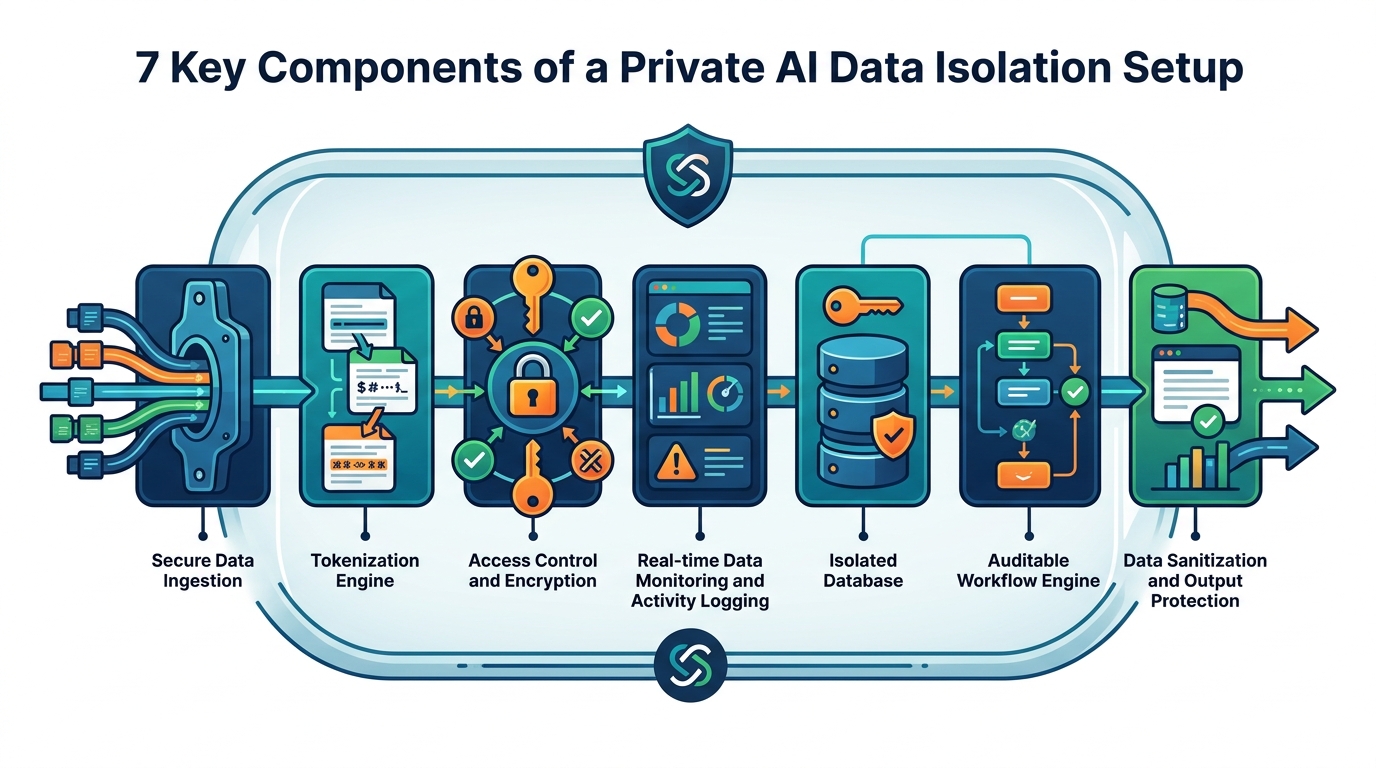
Each company deployment must use its own distinct database instance. This is the foundational layer of isolation. Instead of sharing a single massive database where all client data sits side by side, each business gets a dedicated storage environment. This physical or logical separation ensures that one company's data cannot be accessed by another. It creates a hard boundary that software permissions alone cannot easily breach.
2. Controlled Data Ingestion Pipelines
Only approved sources should feed data into the AI system. A robust isolation setup defines exactly which files, emails, or records the AI can read. This prevents accidental ingestion of sensitive personal data or unrelated corporate information. By controlling the entry point, you ensure that the AI only processes information that is relevant to its assigned tasks. This reduces the risk of data leakage through unintended channels.
3. Granular Access Permissions
Users and AI agents must have specific, limited access rights. Not every employee or AI function needs to see every piece of data. A secure setup uses role-based access control to restrict who can view, edit, or delete records. This principle of least privilege means that even if a breach occurs, the attacker only sees a small slice of the data. It also helps maintain internal privacy between different departments within your own company.
4. Encrypted Data at Rest and in Transit
All data must be encrypted whether it is stored or moving between systems. Encryption ensures that even if someone gains physical access to the servers or intercepts network traffic, they cannot read the information. This is a critical component of any private AI architecture. It protects your data from external threats and internal misuse. Strong encryption standards are non-negotiable for maintaining data integrity.
5. Audit Logs and Activity Tracking
Every action taken by the AI and every user interaction must be recorded. An audit trail provides a complete history of what data was accessed, when, and by whom. This transparency is vital for troubleshooting and compliance. If a data anomaly occurs, you can trace it back to its source. It also demonstrates to clients and regulators that you are taking data protection seriously.
6. Clear Data Retention and Deletion Policies
You must define how long data is kept and how it is permanently removed. Data isolation is not just about keeping data out; it is also about managing its lifecycle. A clear policy ensures that old or unnecessary data is deleted securely. This reduces your attack surface and helps you comply with privacy regulations. It also prevents the AI from relying on outdated information that could lead to incorrect decisions.
7. Defined Authority and Approval Gates
The AI must have written limits on what actions it can take autonomously. Data isolation is closely tied to operational authority. You need to define which tasks the AI can perform on its own and which require human approval. This prevents the AI from taking actions that could expose data or violate company policy. It ensures that human oversight remains a central part of the workflow.
Choosing the Right Isolation Model
When selecting a private AI solution, look for providers that offer independent databases and clear authority controls. Avoid services that share data across clients or use your information for general model training. The right setup balances security with usability, ensuring your team can work efficiently without compromising privacy.
Frequently Asked Questions
What is data isolation in AI?
Data isolation in AI is the architectural practice of keeping one client's data completely separate from another's. It ensures that information from one company cannot be accessed, processed, or used by another company's AI system.
Why is an independent database important?
An independent database is important because it creates a physical or logical barrier between different clients. This prevents cross-contamination and ensures that each company's data remains private and secure within its own environment.
How does encryption protect AI data?
Encryption protects AI data by converting it into unreadable code. This ensures that even if data is intercepted or accessed without authorization, it cannot be understood without the decryption key.
What role do audit logs play in data isolation?
Audit logs play a critical role by recording every access and action within the system. They provide a trail that helps verify compliance and investigate any potential security breaches or anomalies.
Can AI systems share data between clients?
Secure AI systems should not share data between clients. Data isolation ensures that each client's information remains within its own dedicated environment, preventing any form of cross-client data leakage.
How do I ensure my AI provider respects data privacy?
You can ensure your AI provider respects data privacy by reviewing their security architecture, data handling policies, and compliance certifications. Look for providers that offer independent databases and clear data retention policies.